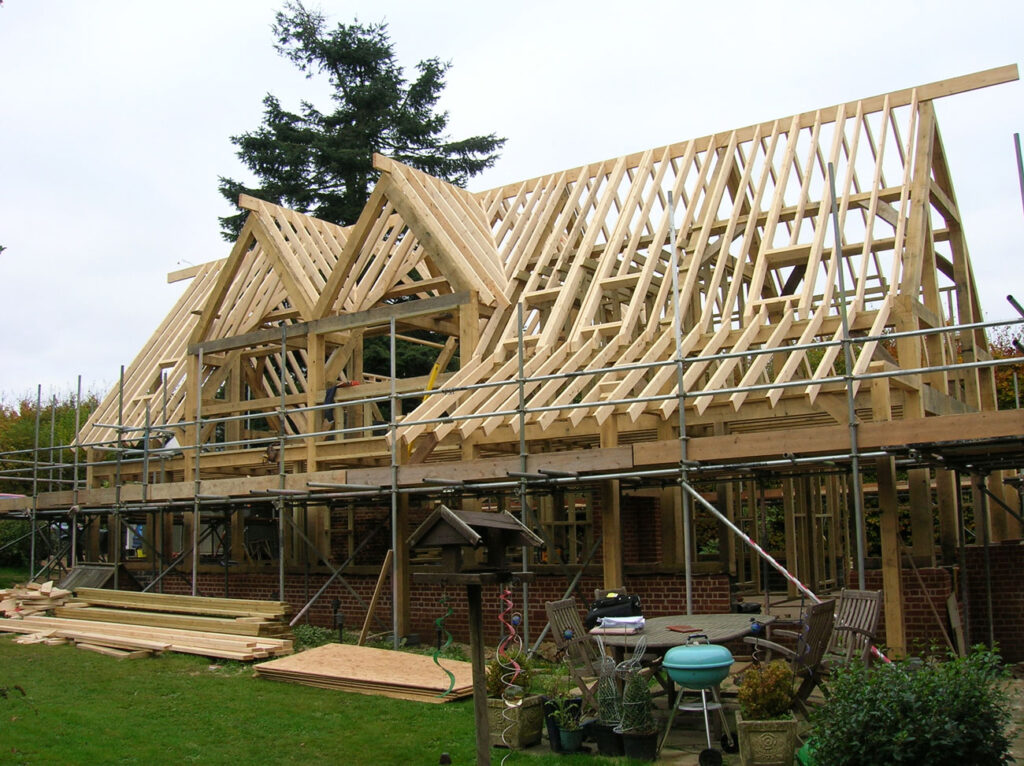
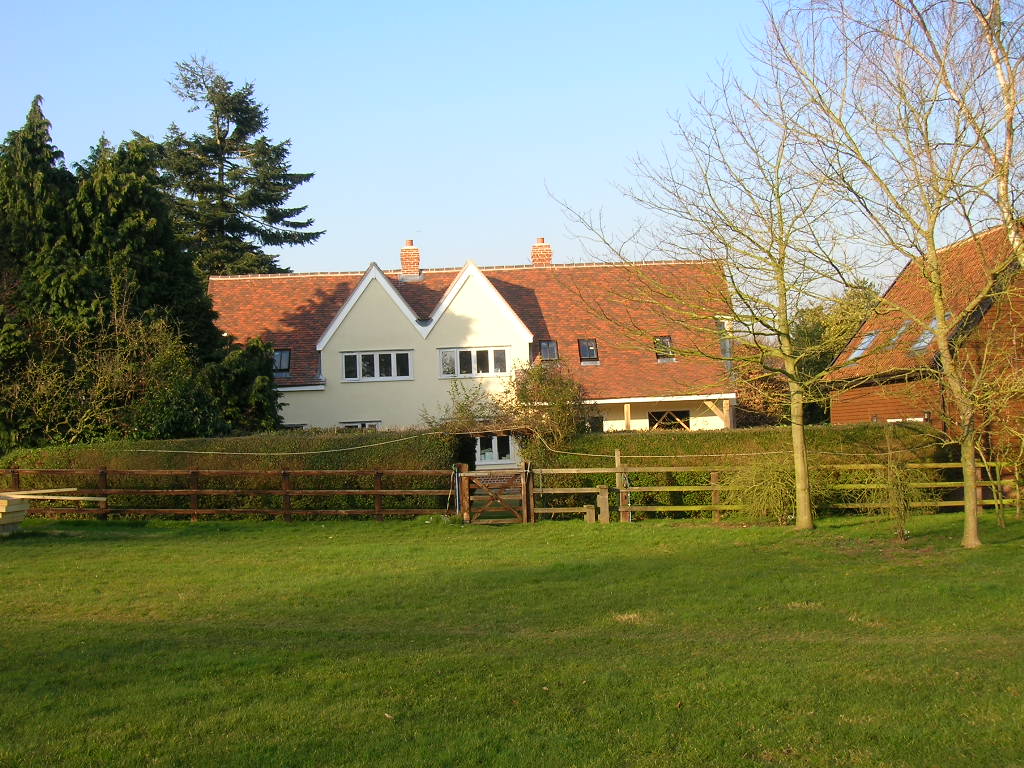
As the house had been lost during their tenure, the owners were determined that the new house should be a worthy successor, and an early decision was made to construct the new house of a traditionally jointed heavy green oak frame.
The format of the new house is based on the vernacular idiom of Suffolk houses, but is deliberately not a copy of the lost house. It follows the same basic scale, shape and proportions but was designed to meet modern requirements; three bathrooms were incorporated on the first floor, and under-floor heating serves the whole ground floor.
The detailed design and construction of the main oak frame was undertaken by Carpenter Oak and Woodland from Wiltshire, whose specialist team of carpenters also erected the frame on the brick plinth walls constructed by the main contractor. This was achieved within a week of the frame being delivered to site.
The only salvageable materials from the old house were some of the bricks from the sitting room fireplace, and these were used to construct the new inglenook fireplace.
Immediately to the East of the house, a two-storey timber-framed and weatherboarded storage building had been constructed in the year before the fire. This building, fortunately undamaged by the fire, was converted into a cottage for the owners so they could move back to live on the site as soon as possible while the main house was reconstructed. On completion of the house, the cottage became a residential annexe to the main building. At the pivot point between the main house and the annexe, a single-storey garden room was constructed to form a link between the two buildings. The garden room was the last part of the complex to be completed in 2009.